🔊 This page talks. Turn your sound on and press play: you should hear eight seconds of music.
Music: a track generated by the instructor for this page.
Round on one patient
MIS 752 · Lab 13 Lite · capstone kickoff · the whole course on one chart · Book Ch. 13 and Ch. 25 · no coding · patient 8410, her chart and every drug check are invented for teaching
At rounds
 pull her chart
➜
 check the wristband
➜
 look it up in the chart
➜
 call the pharmacist
➜
 present it, with sources
In AI
🗂️one patient's chart
➜
🪪a guardrail runs first
➜
🔎search pulls the lines
➜
💊a tool checks the pair
➜
📎a cited answer, routed
You already built every part of a safe AI assistant, one lab at a time. This page tells that story once, in order, and ends with something you keep.
Look at what we built: one question, traced through thirteen labs. See why every piece matters: five switches, a photo and a few tricky questions. Your foundation, your idea: the same line, on something you would build.
Defend it: an honest number, a name on the card, a committee of four. Keep it: one file for Canvas and a dossier for you.
📊 The required path is about 35 model calls and about 6 cents on the defaults, measured: Claude Haiku 5.5 for the quick calls and Claude Opus 5.5 for the committee hearing (with narration, the AI picture and the summary: 52 calls, about 14 cents). Narration and the AI illustration are optional and priced separately: about a third of a cent a spoken clip (about 5 cents to narrate the whole line), about 4 cents a picture. Load a little OpenRouter credit to use it; $10 of purchased credit also lifts the free-model cap from 50 to 1,000 calls a day. Every part still works on a free model, so no one has to pay. The counter at the top shows calls and dollars as OpenRouter measures them.
📖 Read Chapter 25, Regulation, Governance, and the Future (p. 602) ➜
📖 Read Chapter 13, Causal Inference (p. 280) ➜
Same book on Canvas: course files
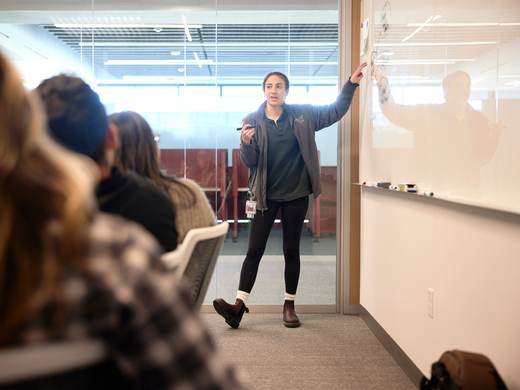
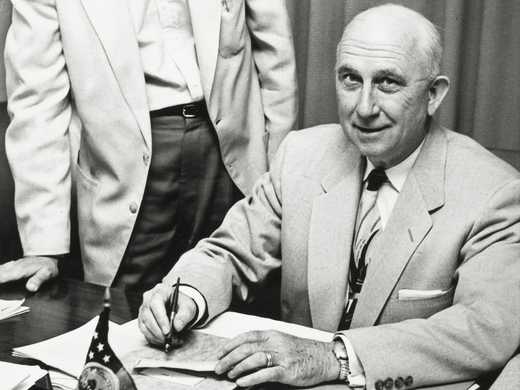
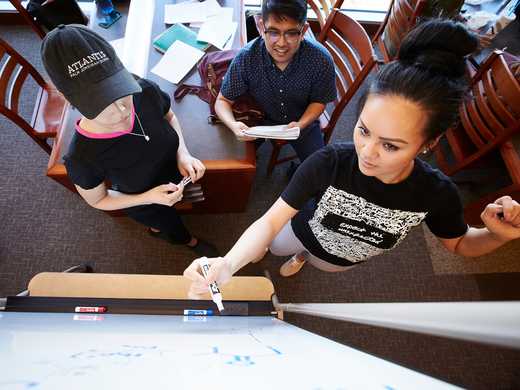
Photos: Josh Hawkins and Becca Schwartz, UNLV Photo Services, and UNLV Special Collections & Archives. Real UNLV health-sciences spaces; patient 8410, her chart, the wristbands and the label are invented.
💡 THE IDEAA safe assistant is not one clever model but several parts running in a fixed order on one record, so every question ends one of three ways: answered with a citation, routed to a human, or refused. Each part is a lab you already did.
🏥 HEALTHCAREThe patient is hurt when a check runs too late, or when an invented lab value looks real to the clinician who acts on it.
💼 BUSINESSBefore anyone pays, finance asks whether it really saved time and governance asks whose name is on it. Most AI pilots die in those two meetings, in healthcare and everywhere else.
🎯 BY THE ENDyou can trace one question through thirteen labs and say what each protects; take a part off the line on purpose and stress test the guardrail; carry the same five stops into another field, where only the data changes; tell an honest saving from an inflated one and put a name on the model card; and leave with a dossier and a study guide built from your own runs.
🔑 Connect a model. Paste the OpenRouter key from Lab 1. It stays in this browser tab: never saved, never sent anywhere except OpenRouter. (Instructor's computer: leave it empty to use the local model.)
🔊 The voice that reads aloud · 💾 saving your progress · what the lab costs
📊 The required path uses about 35 model calls (about 6 cents, measured, on Claude Haiku 5.5 with the hearing on Claude Opus 5.5): five missions and their break-its, three red-team attempts, your world's five missions, the hearing, three quiz answers and two questions to the course. Optional parts add to the counter at the top. On a free model a new key allows about 50 calls a day: if you run out, finish tomorrow.
🔒 Everything runs in your browser. Each model call goes from this page straight to OpenRouter with your own key, and nothing you type is sent to any other server (if you use a microphone button, your browser's own speech service turns your voice into text).
ACT 1
Look at what we built
Thirteen labs, one line. Every station is a part you already made, and one question is about to ride the whole line.
1 · One question, thirteen labs
Every lab you did this term is one station on this line. Each card says two things: what you learned, and how it makes the world better. Press the button to follow one question through all thirteen stations, then read what it showed you. Click any station for the details.
👆 Click any station to open its lab card here.
📇 All nine lab cards at a glance (the same cards a station opens), with your mastery from the exit ticket
➜Every station is a part you built. Now watch what happens when one is missing.
ACT 2
See why every piece matters
One chart, one bench, five switches. Run a mission with every station on, then take one off the line and run it again.
2 · The test bench: one chart, five switches, five missions
Patient 8410's whole chart is on the left: sixteen lines, each with an id. The five switches on the right are stations 7 to 11 of the line above, in order. Pick a mission and run it both ways. Switch a station off and the same run becomes the break-it.
🔌 The five stops, in order. Green is on the line; flip one off and run again.
💊 The pharmacist's order form: all the model reads about the tool
THE PHARMACIST'S ORDER FORM
💊 get_med_interactions
What it is for
Fill in
drug_a, drug_b
✍️ Your own question
Ask anything about patient 8410. The switches above apply: switching one off removes that station from the line, which is all "break it" means.
🧭 What this shows: your own questions test the joins between the parts: whether the wristband check stops what it should without turning away real questions, and whether the assistant says "not in her chart" instead of guessing. A question that slips through or is wrongly refused is not a failure on your part; it is a finding that belongs on the model card's list of known failure modes.
🔍 What this page simplifies, three self-checks, and where to read more
🔍 What this page simplifies, honestly: the chart search here is a keyword match on sixteen lines, and the wristband check is a short list of written rules. The Lab 13 notebook uses real embeddings, a reranker and a similarity score over her full Synthea chart. Patient 8410 is modeled on the synthetic patient the notebook's rule picks (84, diabetes, heart disease, ten active medications), with an invented ID.
🧭 What this shows: each stop is a part you met in an earlier lab, and the order is the design. The wristband check runs before anything is looked up and the route is chosen last, after the citations are checked, because a check that runs too late protects no one.
Why does the wristband check run before the chart search and the model?
A question that should not be answered should not cost a lookup, a model call, or a log line with somebody's identifier in it. Stopping first also means the model never sees the question, so nobody can talk it into answering.
The pharmacist says "could not be checked." Is that the same as "no interaction"?
No. "Could not be checked" means the table does not cover that drug, so nobody knows yet. "No interaction" means it was checked and nothing was flagged. Blurring the two turns a gap in the data into false reassurance, so the assistant must say which one it got, and a human should look at the first.
Why does every answer cite chart lines like [C14]?
So the attending can check each claim in seconds, and so a simple automatic check can catch a citation to a line that does not exist. It is "where does it say that?" asked on every answer. A real line can still be cited for a claim it does not support, which is why a person still reads the answers.
📖 Read more in the book: What Makes an Agent: Observe, Plan, Choose Tools, Execute, Evaluate (p. 439)
📖 Read more in the book: Guardrails for Autonomous Systems (p. 452)
📖 Read more in the book: Drill: Building a Patient Q&A Agent Using RAG and Health Record Integration (p. 491)
▶ Watch: What is Agentic RAG? (IBM Technology): retrieval plus a tool, chosen by the model, inside a loop.
3 · Real life: a photo, and a tricky question
In real life, questions do not always arrive neatly typed. A nurse scans a wristband at the bedside. A patient texts a photo of a pill bottle. Someone asks about "the man in bed 4" instead of giving a number. Try both on the same assistant, and see whether the line still holds.
📷 A photo comes in Lab 12 1 call
Pick a moment below. A model reads the photo (station 6), and every station after it runs on what it read: the wristband check, the chart, the pharmacist. A misread number would carry all the way down the line, so check what it read.
Never photograph a real patient's band or label: Lab 2's rule holds for pictures too.
🧠 Think it through, for this act
➜You have seen what each lab protects. Now carry it into your field.
ACT 3
Your foundation, your idea
Everything on the line above is now yours to use. What would you build with it? Describe one idea in a few words, and the same thirteen stations run on it. Then answer the two questions every buyer asks: did it save time, and who signs?
4 · What would you build?
Think of one person whose day you could make better: a nurse, a teacher, a small business owner, a volunteer, a patient. Describe what you would build for them in a few words. The page builds it on the same line you just traced, so you can see your foundation at work on your own idea.
No idea yet? Borrow an example (no model call):
5 · The same bench in your world
Same five parts. Same code. Only the data changed: the record, the table, the rules and the labels. Run your five missions, ask it your own question, and stress test it.
🔌 Your world's five stops, in order. Flip one off before a run to break it.
🧰 The order form: all the model reads about the tool
✍️ Your own question
Type or say one. The switches above apply.
🔴 Red team in your world
Optional, up to 3 calls: same idea, new rules. A finding is a success.
6 · The CFO's question, and who signs
Before anyone pays for your assistant, finance asks whether it really saved time and governance asks whose name is on it. Both questions are asked about the assistant you just ran.
⏱️ Did it save time, really?
🎯 GOALSee how a naive before-and-after number can credit a tool for the easy cases it happened to get.
🩺 ANALOGYA new resident's patients go home a day sooner. Is she better? Look at her list: she was given the sprained ankles and the others got the sepsis. Until you compare her ankles with their ankles, you measured the assignment, not the doctor.
💡 WHYThis pilot is simulated, and that is the point: we set the true saving ourselves, so you can see which measurement finds it. A real pilot never tells you the answer.
💵 What is it worth a year?
🧭 What this shows: one pilot gives three different answers depending on how you measure it. The naive comparison gives the assistant credit for the easier cases it happened to get, while comparing like with like, within each level of complexity, moves the estimate back toward the truth; because a buyer budgets on this number, that gap can decide whether the tool seems to pay for itself.
📖 Three self-checks, the book, and a real study with the same trap
What is the confounder in this pilot?
How complicated the case is. It drives both who used the assistant (the easier cases, more often) and how long the work takes (easier cases take less time anyway), so the naive comparison gives the tool credit for the easy ones.
What does "like with like" fix, and what can it never fix?
Comparing assisted and unassisted cases within the same complexity level removes the confounder you measured, so the difference left is closer to what the tool did. It cannot fix a confounder you did not measure, such as which people were keen on new tools.
Why can this page show the true saving when a real pilot never can?
Because the pilot is simulated: we set the true saving ourselves, so we can check which measurement finds it. With real data nobody tells you the answer, which is exactly why you practice the trap where you can check.
📖 Read more in the book: Correlation Is Not Causation: Why "Red Wine" Predictions Fail Clinical Trials (p. 282)
📖 Read more in the book: Propensity Scores: The Rosenbaum and Rubin Framework (p. 287)
📖 Read more in the book: For Insurers: "Did This Treatment Actually Cause the Better Outcome?" (p. 297)
📖 Read more in the book: The Productivity Paradox: If AI Saves Time, Will Systems Just Add More Patients? (p. 480)
🌐 Try it live: a real medical study with the same trap
A 1986 study compared two kidney stone treatments. Wikipedia's article on Simpson's paradox shows its numbers in one small table. Free, no account.- Open the article and scroll to the section Kidney stone treatment.
- Compare A and B for small stones, then for large stones: which treatment wins in each group?
- Now look at the bottom row, both sizes together: which treatment looks better there?
▶ Watch: Correlation Doesn't Equal Causation: Crash Course Statistics #8 (CrashCourse, about 12 minutes).
✍️ Who signs off?
🎯 GOALDecide who approves the assistant, what it must never do, and what happens when it is wrong.
🩺 ANALOGYThe Pharmacy & Therapeutics committee decides what reaches the formulary. The package insert says what a drug is for, who it was tested on, and when never to use it. A model card is the package insert for a model.
💡 WHYThe book's point: most healthcare AI failures were not regulatory failures but governance failures. Nobody had the authority, the data or the mandate to stop the system.
PACKAGE INSERT · MODEL CARD · THE HOSPITAL'S WORKED EXAMPLE
Round on One Patient: chart assistant
Class exercise on an invented patient. Not a clinical tool. Not validated.
What it is
A chart assistant for one patient (8410): a guardrail, a search over sixteen chart lines, one tool (a teaching table of fourteen drug pairs), a loop of at most four model calls, and a citation check.
Intended use
Answering a clinician's questions about this patient's recorded conditions and medications, with the chart line cited, during a teaching exercise.
Tested on, and accurate for whom (Labs 11 and 12)
One invented 84-year-old woman, typed questions in English, and the photos on this page. It was never tested across ages, sexes, languages, accents or record types, so nobody yet knows whom it fails.
Never use it for
- any real patient, or any patient other than the one it was built on
- choosing, changing or stopping a dose or a medication
- lab values, vital signs, allergies or notes: none were loaded, so it must say they are not in the chart
Evidence from your runs on this page
Known failure modes
- A written-rule guardrail can be fooled: a name instead of an ID, or "my neighbor in bed 4".
- It can cite a real line for a claim that line does not support.
- The interaction table covers fourteen textbook pairs, nowhere near enough for real use.
Where regulation comes in. Software that supports a clinician who can independently review the basis for what it says may fall outside FDA device oversight under the 21st Century Cures Act's clinical decision support criteria; software that drives a patient-specific decision without that transparency is closer to a medical device. Where a real product lands is a question for regulatory counsel, not for a lab. See FDA's guidance on clinical decision support software.
✍️ The sign-off
In the notebook this table is printed empty on purpose. Type a role or an invented name for each line: whose name goes on this decision?
🧭 What this shows: a model card is the assistant's package insert: what it is for, who it was tested on, the evidence from your own runs, how it fails, and what it must never be used for. The sign-off puts a person's name on the decision, because software cannot take responsibility, and a card with no named owner leaves the patient holding the risk.
📖 Three self-checks, the book, and three live links (the FDA's list, a real model card, a leaderboard for clinical text)
Is every clinical AI tool regulated by the FDA as a medical device?
No. The 21st Century Cures Act (2016) excluded certain clinical decision support software from the definition of a device, using criteria FDA explains in its CDS guidance; one is that a clinician can independently review the basis for what the software says. Software that drives a patient-specific decision without that transparency, or that is meant for patients themselves, is closer to a medical device. Where a real product lands is a question for regulatory counsel.
What is a model card?
The package insert for a model: what it is for, who and what it was tested on, its known failure modes, and the uses it must never be put to. The idea comes from Mitchell and colleagues (2019) and has been adapted for healthcare by groups such as the Coalition for Health AI (book section 25.2).
The book says most healthcare AI failures were not regulatory failures. What were they?
Governance failures. Epic's sepsis model and the Optum care-management algorithm broke no regulation when they were deployed; what was missing was a group with the authority, the data and the mandate to evaluate them after go-live and stop, fix or retire them (book section 25.4).
📖 Read more in the book: The FDA SaMD (Software as a Medical Device) Framework (p. 603)
📖 Read more in the book: Drill: Creating Model Cards and Deployment Checklists for Clinical Review (p. 608)
📖 Read more in the book: Organizational AI Governance (p. 612)
📖 Read more in the book: The Liability Question: Who's Responsible When AI Fails? (p. 619)
🌐 Try it live: what has the FDA actually authorized?
The FDA publishes a list of the AI-enabled medical devices it has authorized, newest first. Free, no account.- Open the list and find the table of devices (it starts with the most recent decisions).
- Look at the Panel (Lead) column for the first twenty devices and count how many say Radiology.
- Look for anything that resembles a chart assistant like this one.
🌐 Try it live: read a real model card
Google's MedGemma is a medical model published with a full model card on Hugging Face. Reading the card is free and needs no account.- Open the card and find the section Intended use.
- Then find Limitations: what does it say the outputs are not intended for?
- Compare it with the package insert above. What does theirs say that ours does not?
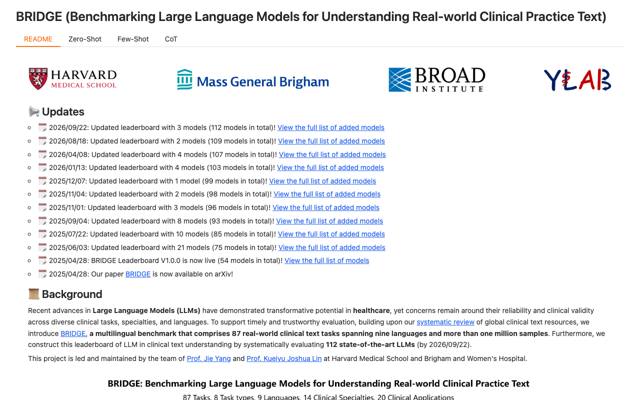
Screenshot: BRIDGE Medical Leaderboard
🤗 Try it live on Hugging Face: BRIDGE, a leaderboard for real clinical text
Before a hospital buys an assistant, someone has to ask which models actually handle real clinical text. Researchers from Harvard Medical School and Mass General Brigham test that in public. Free, no account.- Open the leaderboard and look at the overall ranking.
- Find a model you used in these labs and note where it ranks.
- Look at how many tasks, languages and specialties the test covers, and which ones your capstone would need.
A model ranks near the top on BRIDGE. Is that enough to approve it for your capstone? What else would your governance checklist need?
No. A benchmark shows how a model does on someone else's tasks and data, not on your patients, your notes or your workflow. Your checklist still needs a local test on your own cases, a check across patient groups, a named person who signs off, logging, and a plan for when it is wrong. A good score is a reason to try a model, not a reason to trust it.
▶ Watch: AI/Machine Learning: Regulation, Development, and Real-World Performance Evaluation (Duke Margolis).
🧠 Think it through, for this act
➜Your assistant works, you know what it saves and who signs. Now defend it.
ACT 4
Defend it
Write your capstone on one page and defend it before a committee of four. Then show what your assistant can make: text, sound, a picture, a video and an action.
7 · Your idea, before the committee
Write one paragraph about something you would build: who it helps, what it reads, the one tool it needs, what it must never do, and who would sign off. Four committee members read it, each asks you one question, and then they vote. Your capstone itself is a separate project; this is practice for the questions it will face.
📖 Read more in the book: Workshop: Model Card, Governance Framework, and Deployment Checklist (p. 627)
📖 Read more in the book: Should You Build This? (Ch. 13, p. 298)
🎯 GOALDraft your capstone so a governance committee could say yes, no, or "not yet".
💡 WHYA demo that works is not a product. The committee asks what it reads, what it refuses, what it saves, what can go wrong, and whose name is on it.
Want more structure? The one-page template (optional)
🧭 What this shows: the same five stops fit any field, from an insurance claim to a hotel guest's booking, which is why a committee can review a proposal it has never seen before. A committee says yes to a page that names what the assistant reads, refuses, saves and risks, and whose name is on it, not to a demo that merely works.
🏛️ The committee hearing
Four members read your paragraph and each asks one question. You answer. Then they vote. A model plays the committee, and it can be wrong: that is why you argue back below.
8 · The demo reel: the same answer, five ways
One answer, from your latest run, made into text, sound, a picture, a video and an action. Four of them are easy now. One of them needs a person.
📝 1 · TEXT
This is what the whole course was about: an answer that points at its source, says what is missing, or refuses.
Outside healthcare: a support reply, a contract summary, an email draft.
🔊 2 · SOUND
The studio voice reads it word for word when your key has credit (about a tenth of a cent, measured), otherwise your browser's voice. Pick the voice at the top of the page. The microphone buttons go the other way: speech in, text out (Lab 12).
Outside healthcare: call centers, voice assistants, drive-through ordering.
🖼️ 3 · PICTURE
Drawn in your browser from your own runs: no model call, free.
Outside healthcare: marketing images, product mockups.
🎬 4 · VIDEO
The line from Act 1, recorded in your browser as an MP4 where your browser can, with a studio voiceover when your key has credit (one clip, about half a cent).
Outside healthcare: explainer videos, training clips, ads.
⚡ 5 · ACTION
The route drafts the real-world act. Nothing is ever sent: you approve or reject it, and either way it is logged. Lab 6: an action needs someone's permission.
Outside healthcare: a refund issued, a flight rebooked, a claim paid.
The picture took four cents and four seconds. The decision pipeline took thirteen weeks. Which one would you let touch a patient?
🧠 Think it through, for this act
➜A product that survived a hearing deserves a file you can keep.
ACT 5
Keep it
One file for Canvas. One dossier for you. Then an exit ticket: can you explain each station in your own words?
9 · Hand it in, keep it
1. Download your submission with the button below, then upload the file to the Lab 13 assignment on Canvas. It holds every question, both answers, every trail, your break-it runs, your red team, your world's missions, your ROI numbers, your sign-off, your capstone page, the hearing, your quiz and everything you wrote.
2. Answer these five, a few sentences each. Each asks why:
2. Answer these five, a few sentences each. Each asks why:
- The round. Pick the mission where the plain model and the assistant differed most. What did the plain model not have, and which station made the assistant behave differently? Why that one?
- Break it. Which station, taken off the line, did the most damage, and why does it sit where it does in the order?
- The guardrail's price. Your red team either got past the wristband check or did not. A stricter check refuses more real questions; a looser one lets more through. Which mistake would you rather make at 7 a.m. rounds, and would your answer change for an app that patients use directly? Why?
- Your world. Same five stations, different data. Which station needed the most rethinking in your world, and what are its "easy patients" that could flatter a pilot? Why?
- Who signs. Who should sign your model card, which committee vote was hardest to win, and what is the one use it must never be put to? Why?
🎁 Keep it: your capstone dossier and study guide
One file that is yours: the course on one page as its cover, your capstone as a product spec, the committee's verdict, your world, every run with its trail, your model card, an honest ROI, and a study guide with flashcards made from your own mistakes. It works offline and prints cleanly to PDF.
🧭 What you learned, and why it matters
You traced one question through thirteen labs and saw that the order is the safety: the wristband check runs before anything is looked up, every answer points at a chart line or says what is missing, and the risky ones reach a human.
You took stations off the line and watched what each lab had been protecting, then stress tested the guardrail and wrote down what got through.
You carried the same five stations into another field and saw that only the data changed. You saw that one pilot can report more than twice the true saving, and you put a name on the decision, because software cannot take responsibility.
Those are the questions every AI product meets before it ships, in healthcare or anywhere else: does it work safely, did it really save time, and who signs off?Nothing you type leaves this browser except the questions sent to the model you chose. If you ticked Save my progress, your answers (never your key) are kept in this browser only; untick it to clear them. Download your file before you close the tab.
10 · Exit ticket: two questions for every station
An AI grader scores your answer against a written rubric, and you see the whole rubric first. Lab 7 asked whether you can trust the grade, so you can grade it again, and appeal. Your scores color the mastery dots on the line in Act 1.
🎓 Optional study help: ask the course. A tutor built from the same five stops, pointed at the course itself.
This tutor is the same assistant you built today, pointed at a different record: the course. Its guardrail, search, tool, check and route are the five stops. Open the machinery and watch them work.
THE LAST LAB
This is your foundation. Now go build something great.
Thirteen weeks ago you got a model running. Look at what you can do now:
- 🗂️ Keep private details private, and keep one person's record from mixing with a stranger's.
- 🩺 Choose the right model for the job, at a price someone can afford.
- 🔎 Ground an answer in a source anyone can check in seconds.
- 💊 Give a model a tool, and a limit on how often it may use it.
- 📎 Score it before you ship it, and know when not to trust the score.
- 🪪 Make it say no, and send a person only what needs a person.
- 👁️ Ask "accurate for whom?" before anyone else has to.
- ✍️ Prove a saving honestly, and put a name on the decision.
Most people who use AI cannot do any of these. You can do all of them, in healthcare or anywhere else. Pick one person whose day you could make better, and start your capstone with them.
Thirteen labs, one foundation, and it is yours. Every record and number on this page is invented for teaching.